Excellence Equation: Why the Best Retailers are Investing in People and Platforms
Brandon Wright
When jewelers talk about preparing for breakthrough sales, the conversation usually splits into two camps: invest in your people or invest in technology. Better training or better tools. Culture or systems.
Here’s the thing: that’s a false choice.
The retailers who are truly excelling right now aren’t picking a side. They’re doing both, and they’re doing it strategically. Breakthrough performance doesn’t come from just hiring great people or just buying the latest software. It comes from understanding that empowered teams and smart platforms work together, each one magnifying what the other does best. That’s the excellence equation. If you’re only working on one side of it, you’re leaving significant opportunities untapped.
Vlora Fluted 14K emerald cut engagement ring 0.06 diamonds (center not included) MSRP $2,250 vloriajewelry.com 800.807.2481
Uneek Jewelry 18K white and yellow gold with 1.42 CTW diamonds MSRP $9,350 uneekjewelry.com 213.622.5128
The retention crisis no one’s talking about
Staff turnover in retail is quietly bleeding stores dry, and the jewelry industry is no exception. The cycle is exhausting and expensive: you spend weeks training someone, watching them finally start to connect with your customers and understand your inventory, and then they’re gone. Back to square one with job postings, interviews, and another round of onboarding.
But the real cost goes far deeper than the time spent recruiting and retraining. Every departure means lost relationships with the clients who connected with that particular associate and now feel like strangers when they walk through your door. It means institutional knowledge walking out with every exit. The new hire doesn’t know that Mrs. Anderson prefers yellow gold, or that the couple who came in last month are saving for an anniversary band, or that the regular customer on the fence about that pendant just needs one more touchpoint to make the decision.
The jewelers who are breaking through understand this reality. They’ve stopped treating staff as interchangeable parts in a machine and started investing in culture, ongoing development, and meaningful recognition. They’re creating actual career paths rather than just offering jobs. They’re building teams that want to stick around because people feel valued, supported, and genuinely set up to succeed.
This investment takes different forms depending on the store. Some retailers are implementing structured training programs that go beyond basic product knowledge. Others are creating mentorship opportunities where experienced associates help develop newer team members. Many are simply being more intentional about feedback, celebration, and creating an environment where people feel heard. When your team knows you’re genuinely invested in their growth and wellbeing, they invest back.
That kind of loyalty creates a foundation that can weather economic uncertainty, busy seasons, and the inevitable challenges that come with retail. It compounds over time in ways that constantly turning over staff never will.
Why great people need great tools.
But here’s where the equation gets more interesting. Even your most talented, dedicated salespeople can’t reach their full potential if they’re constantly fighting inadequate systems or working without the right support tools.
Consider what happens when your best associate has to rely on memory alone to track client preferences. They might remember a few key details about regular customers, but what about the person who came in six months ago and mentioned they’d be back when they were ready? Or the client who browsed online and then visited the store, creating a gap in the information your team can access? Without systems to capture and organize these details, countless opportunities slip away simply because there’s no practical way to remember and act on them all.
The right technology doesn’t replace the human connection that makes jewelry retail special. Instead, it creates the conditions for more genuine, personalized interactions to happen. Clienteling platforms like Clientbook help your team remember the details that make customers feel truly known and valued. Proper scheduling tools prevent the kind of burnout that comes from chaotic, last-minute shift changes. Communication systems keep everyone aligned on promotions, inventory updates, and customer follow-ups so nothing falls through the cracks.
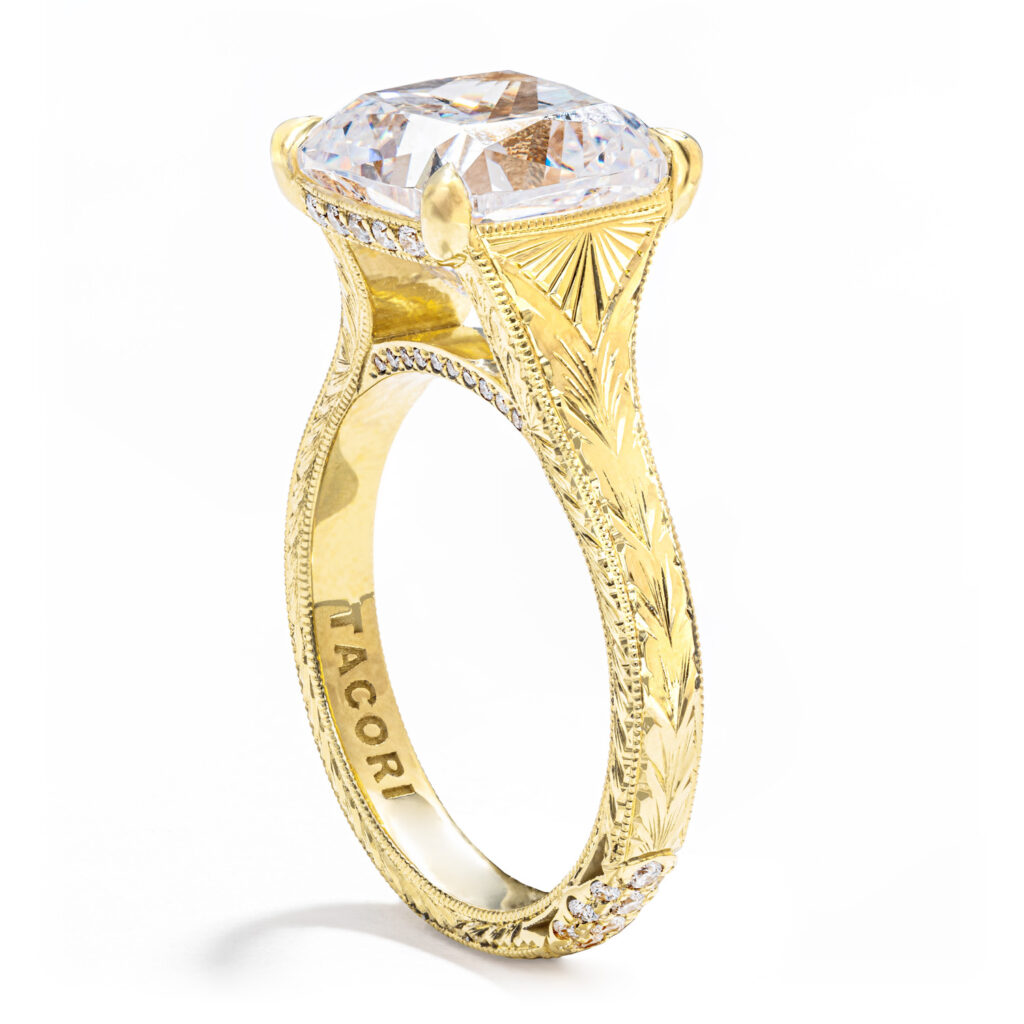
Tacori 18K yellow gold cushion wheat engraved ring MSRP Starting at $6,090 tacori.com 800.860.2523
According to Gallup,
highly engaged
teams show 21%
greater profitability
compared to
disengaged teams.
This is where something transformative happens. When great people have access to great tools, they don’t just perform their existing tasks more efficiently. They become capable of delivering experiences that simply weren’t possible before. In fact, 43% of businesses report that CRM software reduces employee workload by 5-10 hours per week by automating repetitive tasks. That’s 5-10 hours your team can redirect toward the high-touch interactions that actually drive sales rather than administrative scrambling.
The platform doesn’t make the salesperson great, but it removes the friction that was holding them back from being as great as they could be.
The compounding effect of getting both right
When you bring both sides of the equation together, something remarkable happens. The results aren’t just additive; they’re multiplicative. An engaged, well-trained team equipped with systems that make their work easier doesn’t produce incremental improvement. You see exponential results that change the trajectory of your business.
Research backs this up. According to Gallup, highly engaged teams show 21% greater profitability compared to disengaged teams. But engagement alone isn’t enough if your team is working with one hand tied behind their back. On the technology side, businesses using CRM systems see a 29% increase in sales and 34% improvement in sales productivity. Retail-specific CRM platforms like Clientbook are designed specifically for this kind of relationship-driven selling, helping jewelry
stores capture and act on the customer details that matter most. The magic happens when you combine both: engaged people empowered by the right platforms.
That’s what breakthrough actually looks like in practice. It’s not one dramatic pivot or a single investment that changes everything overnight. It’s the careful orchestration of multiple elements working in harmony: a team that genuinely cares about customers, tools that actually work the way they’re supposed to, and a culture that supports both of those things consistently.
The retailers who are thriving right now, the ones who are seeing growth even when economic conditions are challenging, aren’t choosing between people and platforms. They’re building businesses where one continuously amplifies the other. Their staff feel supported by technology that makes their jobs more manageable and their customer interactions more impactful. And that technology only delivers value because it’s in the hands of people who are trained, engaged, and empowered to use it well.
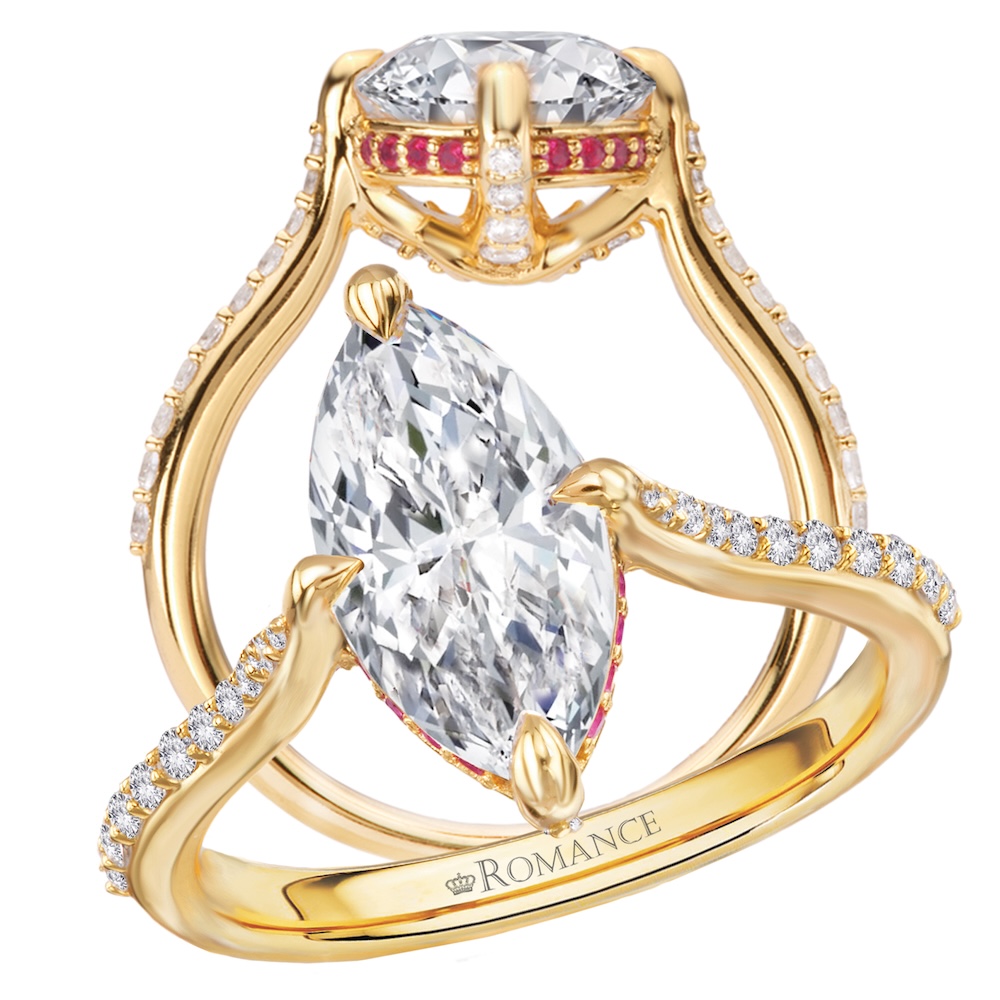
Romance by KIM 14K marquise diamond semi-mount engagement with diamonds and rubies on the gallery MSRP $3,565 kimint.com 800.275.5555
Goldora/IDD Diamond fashion ring 1/2 ctw in 14K MSRP $3,200 iddluxe.com 800.621.11623
Excellence in jewelry retail isn’t accidental, and it doesn’t happen because you got lucky with a great hire or stumbled onto the right piece of software. It emerges from deliberate, strategic choices to invest meaningfully in both dimensions: the people who represent your brand every day and the platforms that help them do that job at the highest level.
The breakthrough happens at the intersection of these investments. It shows up in higher conversion rates, stronger customer loyalty, better staff retention, and the kind of reputation that brings new clients through your door based on word of mouth alone.
If you’re only investing in one side of the equation right now, the question worth asking is simple: what opportunities am I leaving on the table? What could become possible if you committed to excellence in both areas?
Because in an industry where relationships matter more than almost anything else, the retailers who win are the ones who give their people both the reason and the resources to build those relationships exceptionally well.