Few gemstones inspire as much fascination as emerald. Its rich green color has captivated royalty, collectors, and jewelry lovers for thousands of years. Yet emerald’s beauty is only part of its story.
A Member of the Beryl Family
Emerald is the green variety of the mineral species beryl, a family of gemstones that also includes aquamarine (light blue to greenish blue), morganite (pink or peachy pink), heliodor (yellow), and goshenite (colorless). Although each variety shares the same crystal structure and chemical composition, tiny amounts of trace elements create dramatically different colors.
The distinction between emerald and green beryl isn’t always clear-cut. In general, emerald displays a richer, more saturated green or bluish-green than green beryl, giving it the vibrant appearance consumers expect.
Where Does Emerald Get Its Color?
The answer lies in chemistry. Trace amounts of chromium, vanadium, or occasionally iron can be present within the crystal structure as the emerald forms. These trace elements absorb portions of visible light, allowing the rich green color to emerge.
When evaluating emeralds, color remains the single most important value factor. The most desirable stones display a medium to medium-dark tone with vivid, evenly distributed green color.
Emeralds that are overly dark may not display the green that is desired, while those that are too light may be classified as green beryl.
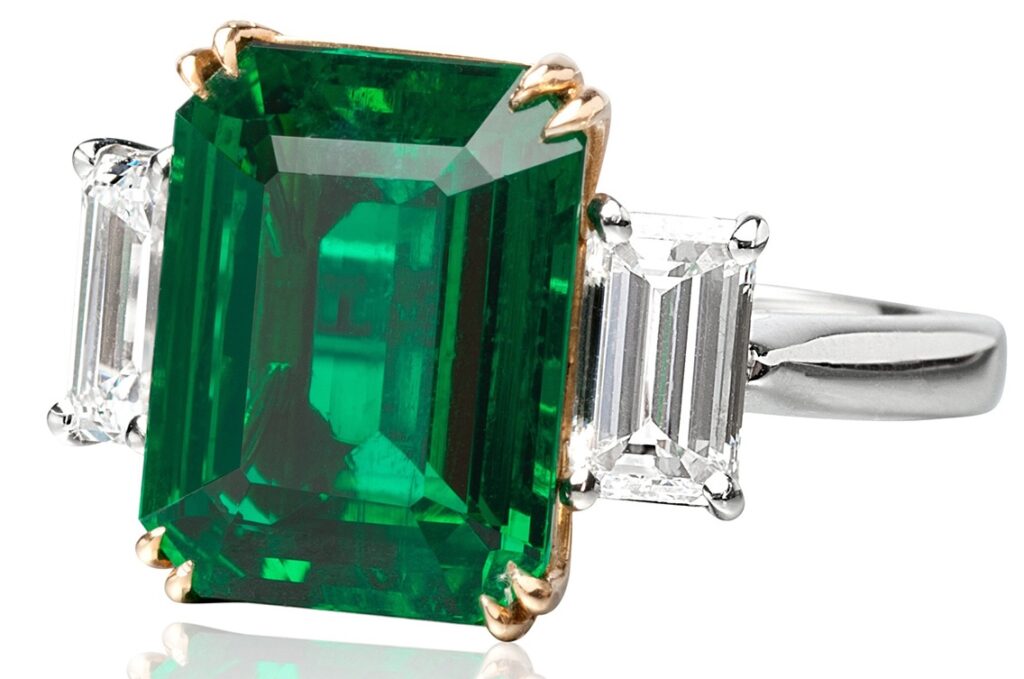
Jack Abraham Emerald cut Zambian emerald 6.24CTW & diamond ring set in platinum & yellow gold MSRP $240,000 jackabraham.com 212.688.2747
Several countries produce fine emeralds, each with different characteristics.
Colombia is perhaps the most famous source, producing emeralds for centuries from mines such as Muzo, Chivor, and Coscuez. Colombian emeralds are often prized for their richly saturated green color and relatively low iron content.
Zambia has become one of the world’s leading producers of fine emeralds. Many Zambian emeralds display a slightly bluish-green hue and are known for excellent transparency and larger crystal sizes.
Other notable sources include Brazil, Ethiopia, Afghanistan, Pakistan, Zimbabwe, Madagascar, and Russia.
The Beauty of Nature’s “Garden”
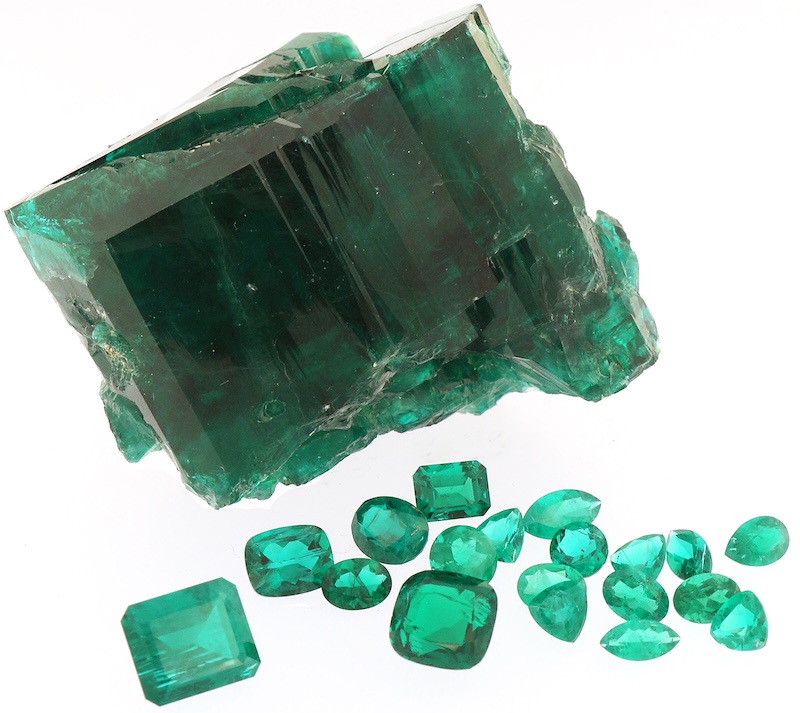
Most natural emeralds contain inclusions formed during crystal growth. The internal features are so common that the French term jardin, meaning “garden,” has been used to describe their appearance.
Customers may initially view inclusions in emeralds as flaws. Instead, they can be introduced as part of emerald’s natural fingerprint—a reminder that the gemstone formed under extraordinary geological conditions.
That doesn’t mean clarity is unimportant. Emeralds with exceptional transparency and few visible inclusions are among the rarest and most valuable. However, their absence may prompt additional gemological examination to determine if the emerald has been treated or is synthetic.
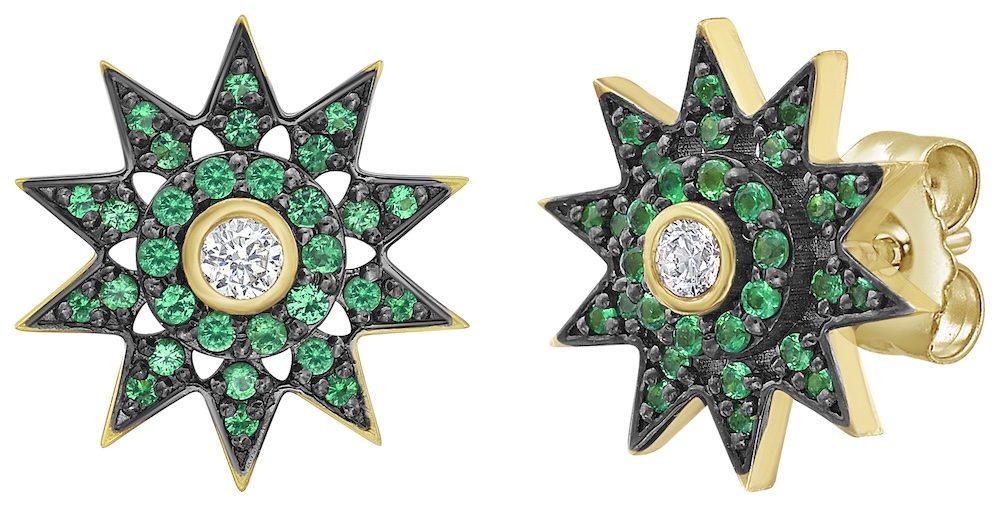
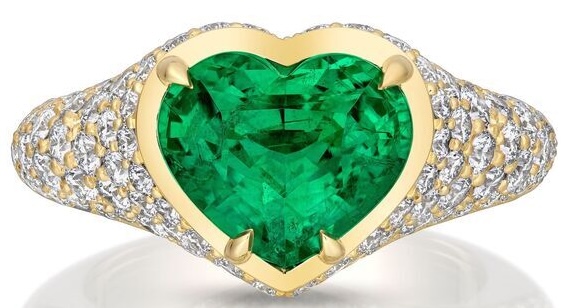
Omi Priv Emerald diamond 18K yellow gold ring MSRP $130,000 omiprive.com 626.331.4533
Clarity Enhancement: Common and Important to Disclose
Because many emeralds contain surface-reaching fractures, clarity enhancement to reduce the visibility of fractures is considered a standard practice within the jewelry industry. Traditionally, these fractures have been filled with cedarwood oil, although modern polymer resins and proprietary fillers are also widely used.
These fillers require appropriate care. Ultrasonic cleaners, steam cleaning, excessive heat, and certain chemicals may damage or remove the filler. Gentle cleaning with warm water, mild soap, and a soft cloth or brush remains the safest recommendation.
As with any gemstone treatment, full disclosure is essential. Customers should understand that clarity enhancement is common and how proper care helps preserve the gemstone’s appearance.
Natural or Synthetic?
Synthetic emeralds have been commercially available for decades. Because it has essentially the same chemical composition and physical properties as natural emerald, gemological observation and testing are often required to distinguish the two. Most synthetic emeralds are produced using either flux-growth or hydrothermal-growth methods.
Disclosure is key; consumers deserve to know exactly what they are purchasing. Clear communication builds credibility and reflects professionalism.
Turning Knowledge into Confidence
Emerald is more than a birthstone for May or a beautiful green gemstone in the showcase. It is a gemstone with a remarkable geological story, unique natural characteristics, and centuries of history.
For jewelers, that story is an opportunity.
An informed customer is a more confident customer. When we take the time to explain what makes emerald special—not despite its natural characteristics, but because of them—we elevate the buying experience and reinforce the value of professional jewelry expertise.
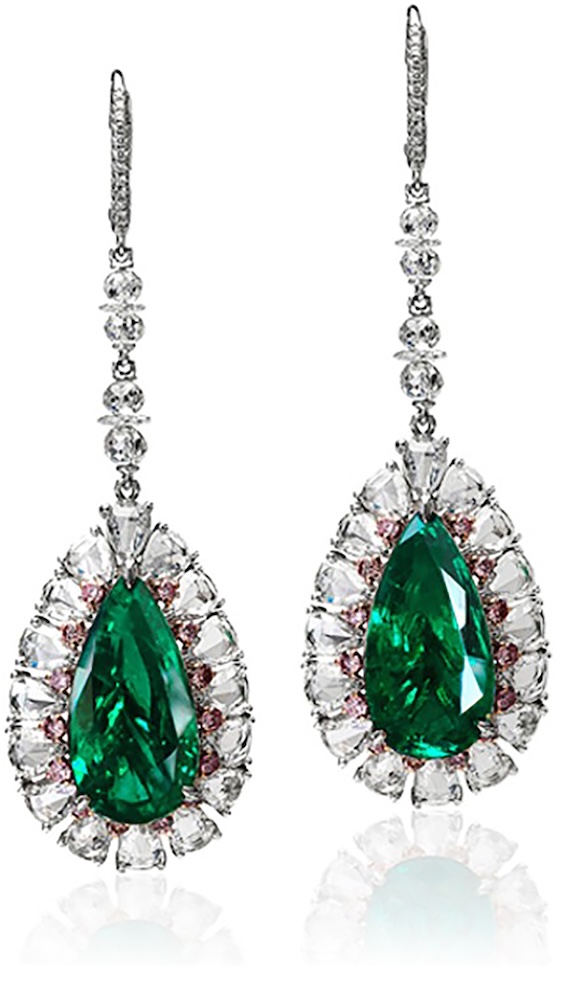
Jack Abraham Pear-shaped Colombian emeralds 17.38CTW & diamond earrings set in 18K gold. MSRP $380,000 jackabraham.com 212.688.2747
Wade Abel, CG, JEA, is the Director of Education and Gemology, for the American Gem Society. The American Gem Society (AGS) is a nonprofit trade association dedicated to ethics, knowledge, and consumer protection within the jewelry industry. AGS awards credentials for its members, who are held to the industry’s highest standards and must pass annual recertification examinations to maintain their titles. Visit americangemsociety. org to learn more.