Leave No Metal Behind: Small Changes in Bench Habits can Add up to Real Savings.
Helen I. Driggs
Like many jewelry makers, I’m dismayed by the soaring costs of tools, metals, and other materials needed to create my work. I’ve long subscribed to a “less is more” mindset in the shop—especially when precious metals are involved—but even copper prices are now climbing, and silver and gold have already rocketed out of reach for many independent studio and artisan jewelers, me included. Here are some of the tactics I’m using to make the most of every gram of metal, no matter the type, and here’s hoping the metals market settles soon, for all our sakes.
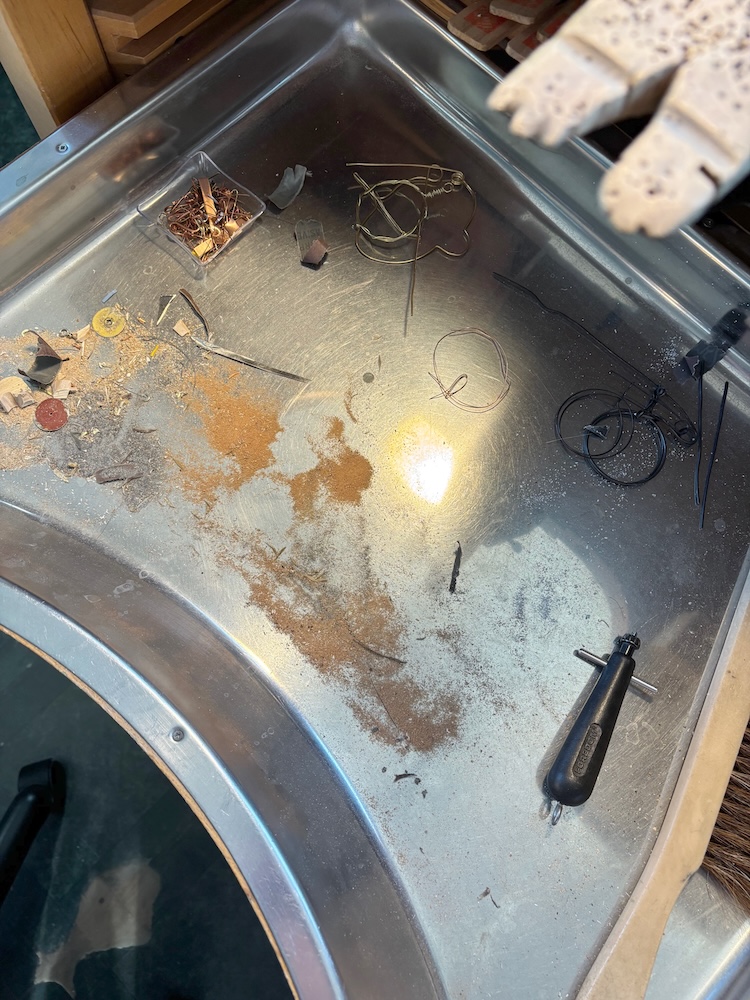
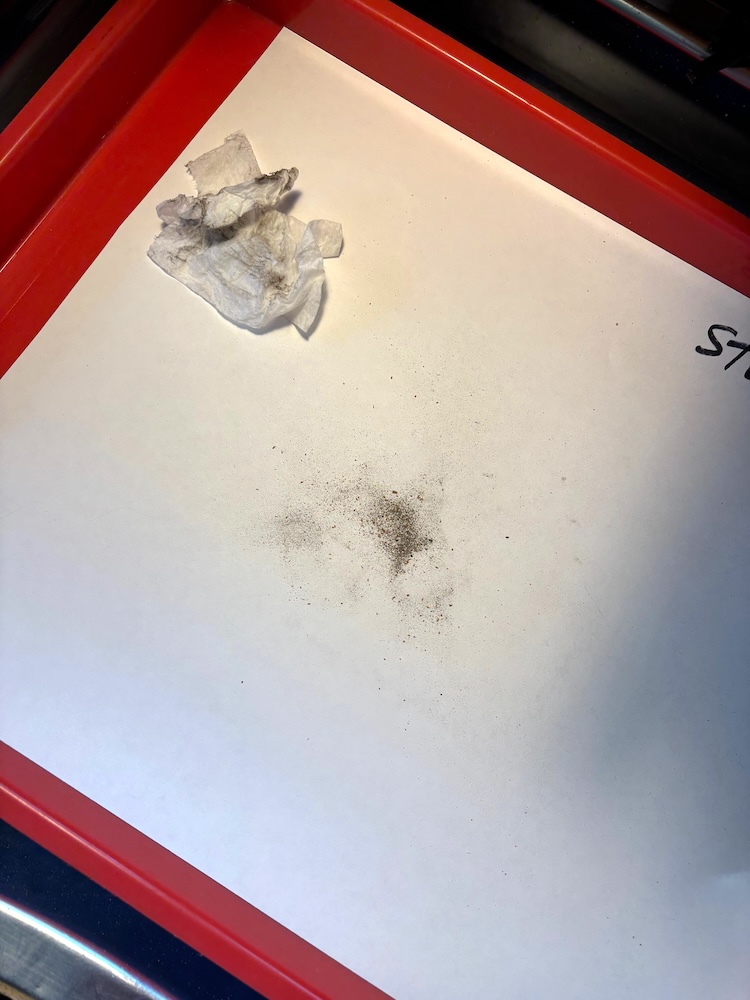
Once upon a time, my bench pan looked like this—not as messy as some I’ve seen, but far too messy for today’s reality.
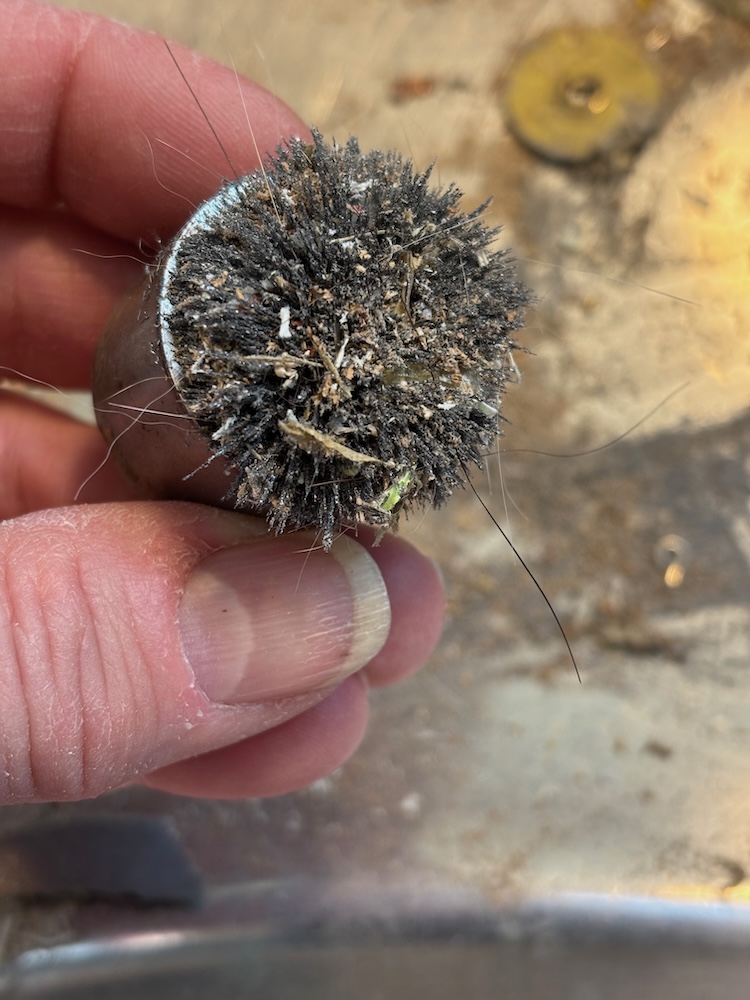
The best way to begin a thorough scrap reclaim and cleanup is with a magnet to remove steel. I was surprised by how much drilling swarf, broken blades, and filings it pulled out—material I once would have tossed, but not anymore. Now I save them in a bin and bring them to the scrap yard for refining.
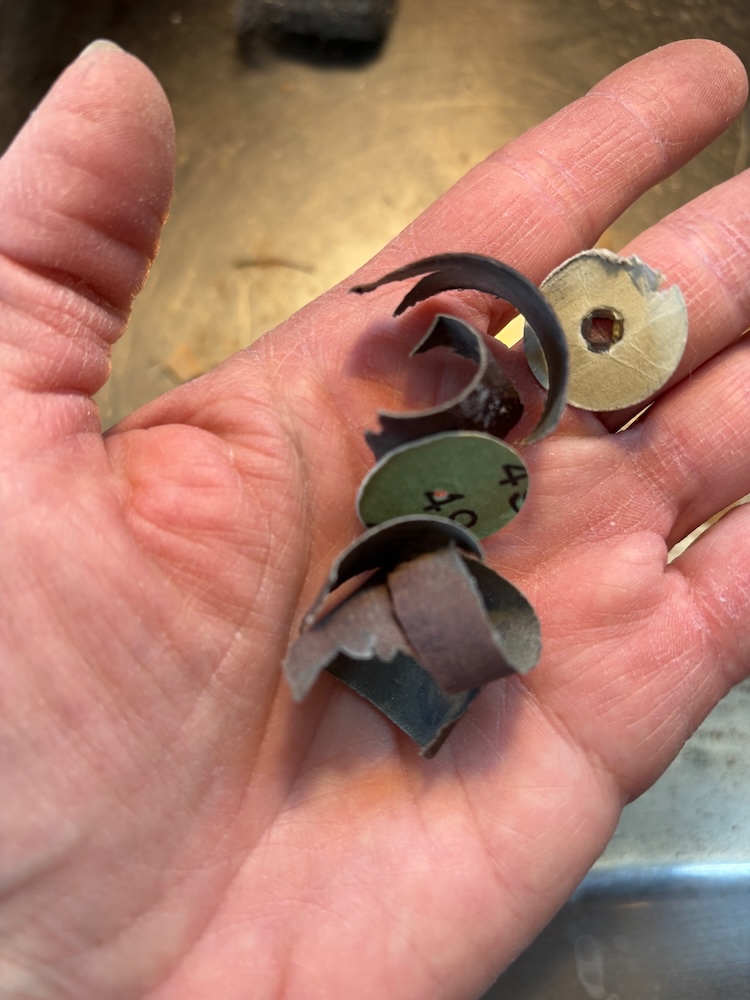
When I’ve used a consumable abrasive to the end of its life, I save what remains and label it according to the metal on which it was used. These pieces still hold a surprising amount of metal dust, so they go onto my reclaim trays.
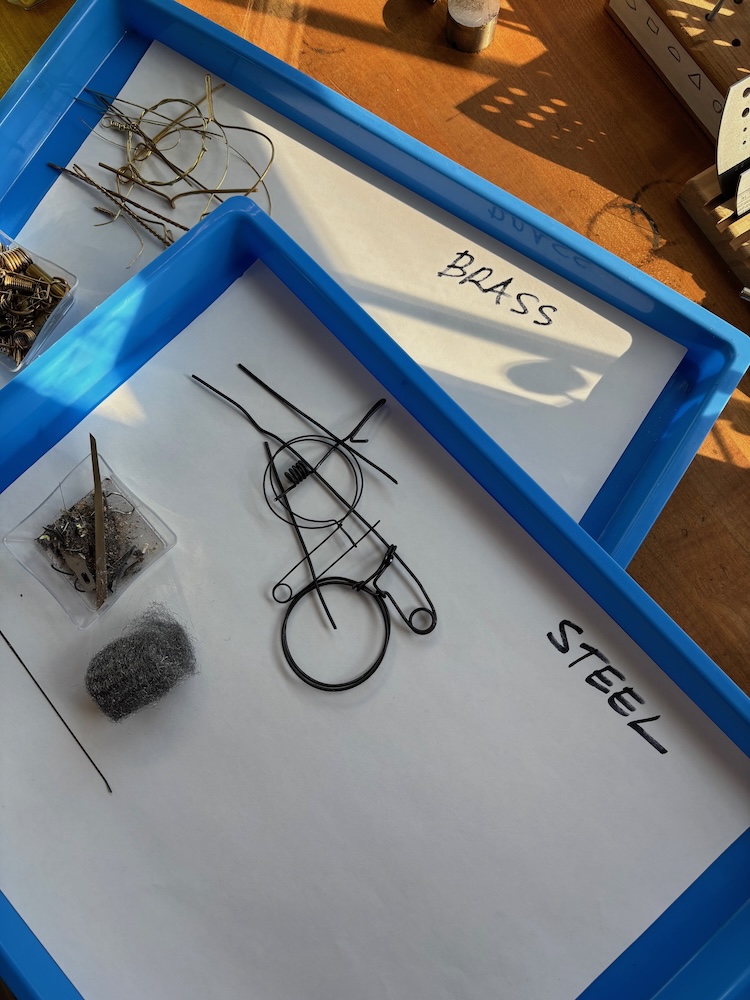
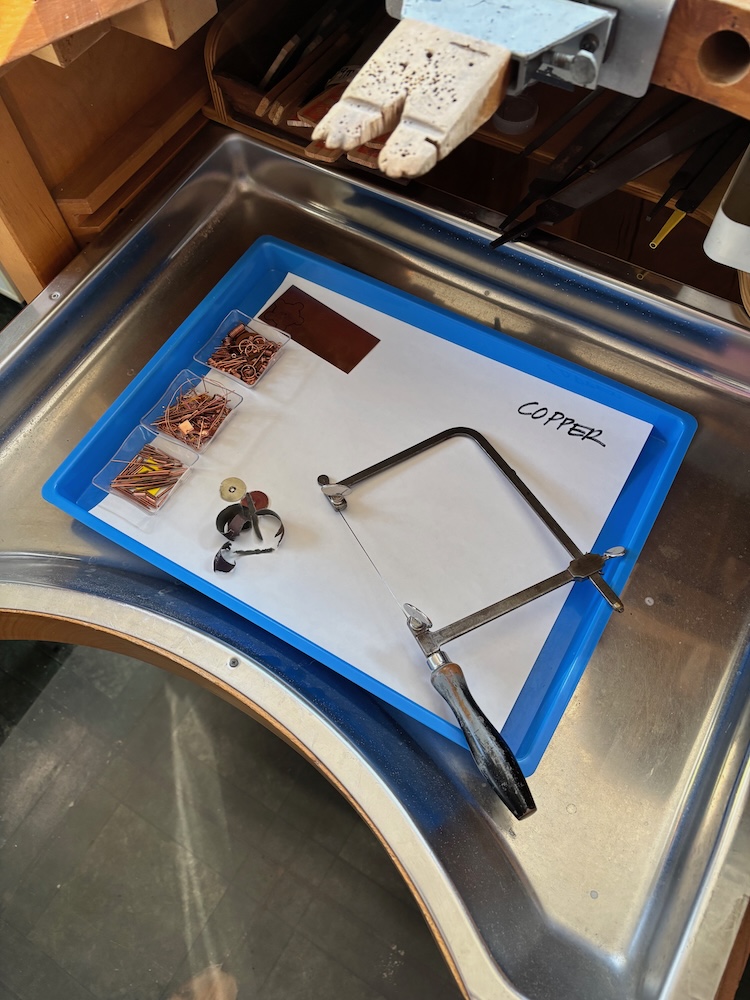
I purchased a set of children’s art trays at the local teachers’ supply store in two colors: blue for base metals and red for precious metals Each tray is lined with an 11 x 14-inch sheet of bond paper to catch shavings and metal dust as I work.
My reclaim trays are stacked on a side table, and, as I switch between metals, I place the appropriate tray under my bench pin in the sweeps drawer to catch anything that falls.
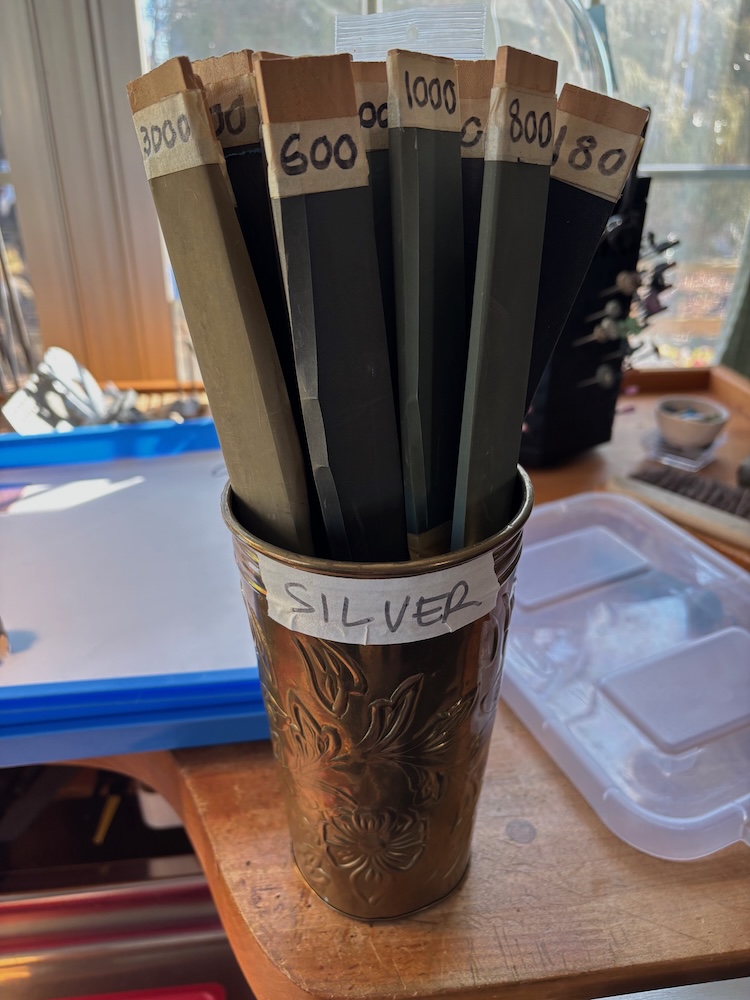
I also created a dedicated set of sanding sticks for silver only, allowing me to tear off and reclaim dust from the abrasive paper.
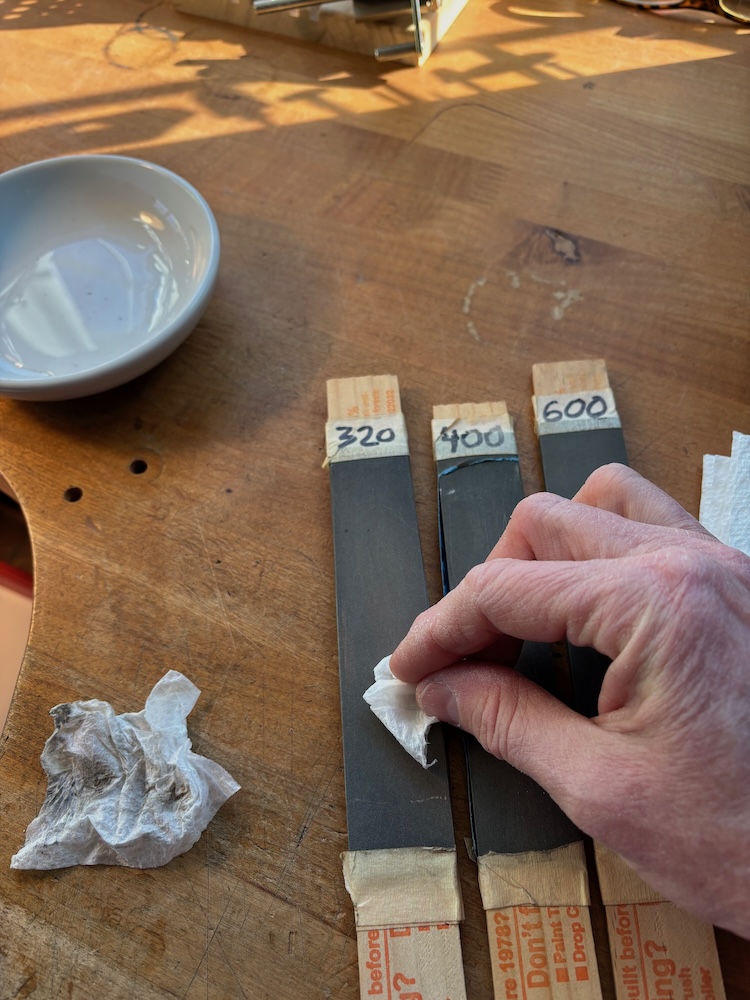
At the end of each project, I use a small, damp square of paper towel to wipe dust from my bench pin, sanding sticks, saw handle, and hands. As I work, I also tap my files on the reclaim tray to release any clinging scrap.
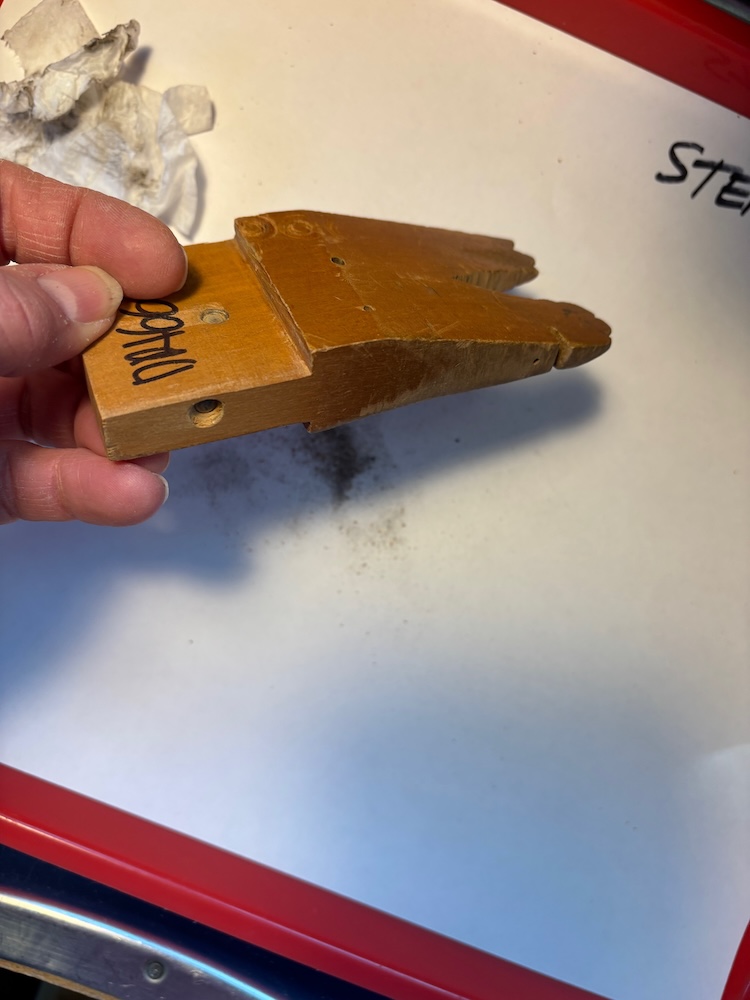
Finally, I remove the bench pin, invert it over the reclaim tray, and tap out any remaining dust from the surface and drilling pits.
The damp paper towels are left on each tray to dry. When I’m ready to send in my scrap, I fold the bond paper liner into quarters, add any larger scrap, dried paper towels, spent abrasive papers, and wire ends, and then slip the entirebundle into a labeled, sandwich-sized Ziploc bag to ship to my refiner.
Helen I. Driggs is an experienced metalsmith, lapidary, and studio jewelry instructor. Visit her website (materialsmithing.com) and Instagram (hdriggs_ fabricationista) for other jewelry-related information.
Manufacturing Jewelers & Suppliers of America (MJSA) is the U.S. trade alliance of jewelry makers, designers, and related suppliers dedicated to professional excellence. Its mission is to supply the expertise, customer connections, and resources needed to achieve success and maintain a competitive edge. The nonprofit MJSA Education Foundation supports career and training initiatives for students and workers throughout the industry. It oversees the annual “Future of Jewelry Making” scholarships as well as the MJSA Mentor & Apprenticeship Program. To learn more, go to MJSA.org.